Why sustainability is an IT and business topic today
Sustainability is no longer a nice-to-have—it is a strategic necessity. Companies are under pressure from multiple directions: regulatory requirements such as the EU CSRD, growing expectations from investors and consumers, and not least the economic benefits of resource efficiency. To meet these demands, ESG data (Environmental, Social, Governance) must not only be collected, but also integrated into company-wide processes and made meaningful and actionable.
SAP S/4HANA provides a comprehensive digital platform with solutions such as the Sustainability Control Tower (SCT), Green Ledger, Product Footprint Management (PFM), Responsible Design and Production (RDP), and EHS (Environment, Health & Safety), enabling sustainability to be measured, managed, and operationalized in real time.
Current case studies and cross-module insights
SAP’s powerful sustainability ecosystem
SAP describes its portfolio as an integrated system in which each component plays a specific role—and together they enable a strong, data-driven sustainability strategy:
- SCT serves as the central cockpit for ESG data, offering real-time dashboards and automated reports.
- PFM provides product-level emission footprints (Scopes 1–3) and supports sustainable pricing and innovation.
- RDP promotes circular economy principles through material flow analysis and recycling requirements.
- EHS integrates environmental and occupational safety into day-to-day operations with real-time tracking and audit readiness.
- Green Ledger links ESG data with financial information—for fact-based decision-making between profit and planet.
Together, these modules form a continuum approach: capture, report, and act—supported by AI and seamless data integration.
Practical application examples (use cases)
Digital reporting solutions enable sustainability reports to be implemented efficiently and transparently. Automated, cross-client systems simplify compliance with regulatory requirements and make them traceable in real time. These technologies not only help fulfill obligations, but also allow sustainability processes to be actively managed and used strategically.
A particularly noteworthy concept is the Green Ledger. It enables emissions to be recorded at transaction level—similar to financial data—including auditability, budgeting, and internal allocation by cost center. Combined with existing financial systems, this creates parallel ledgers that reflect both ecological and financial aspects.
In practice, new solutions are often first tested in pilot projects before being rolled out broadly. Specialized consulting partners play an important role here, contributing their expertise in the implementation of sustainable reporting and management systems.
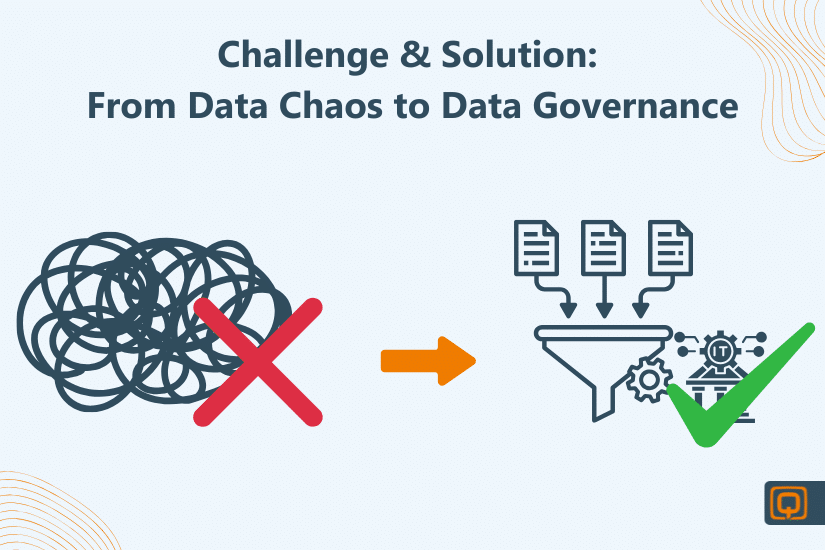
- ESG data often exists in isolation—in spreadsheets, reports, or fragmented systems.
- Compliance remains time-consuming, manual, and error-prone.
- Sustainability is often perceived purely as reporting, not as a strategic development lever.
Solutions at a glance
| Challenge | Solution with SAP S/4HANA & related tools |
| Data fragmentation | SCT integrates ESG data in a contextualized and automated way |
| Manual reporting | AI-supported self-service dashboards and automated reporting templates |
| Lack of financial linkage | Green Ledger connects ESG and finance at transaction level |
| Unclear circular processes | RDP / PFM enable sustainable design and product footprinting |
| Missing operational sustainability | EHS operationalizes sustainability in daily business |
Concrete project approach: A seven-step methodology
- Establish vision & governance
Clarify responsibilities: CEO/CFO for strategic direction, CIO for technology, ESG team for data management. - Current-state analysis & target definition
Select ESG metrics (CO₂, energy, recycling rate, occupational safety) and consolidate initial data. - Launch a pilot phase (PoC)
For example, introduce SCT in one region for CO₂ transparency—or Green Ledger in a single cost center. - Implement technology & integration
Integrate data from both SAP and third-party systems, connect financial processes via SAP Business Technology Platform to central ERP systems, and define interfaces for various emission sources. - Introduce dashboards, reporting & AI insights
Enable self-service reporting, AI-based anomaly detection, and what-if analyses. - Training & change management
Strengthen ESG awareness, familiarize users with tools, and establish new processes. - Scaling & continuous improvement
Include additional business units, automate reporting, and continuously evaluate new use cases.
Conclusion – Transform sustainability, don’t just report it
Sustainability is not an add-on. It is a key lever for efficiency, resilience, and competitiveness. With SCT, Green Ledger, RDP, PFM, and EHS, SAP S/4HANA provides a holistic platform to turn ESG data collection, reporting, and steering into an integrated business model.
Companies that actively shape this transformation—with clear governance, pilot initiatives, and a defined strategy – create real value and secure a green competitive edge in the market.